Current Health Expenditure (CHE) as % Gross Domestic Product (GDP)8.4%CHE/GDP
Out-of-pocket (OOPS) spending as % of Current Health Expenditure (CHE)26.7%OOP/CHE
Domestic General Government Health Expenditure (GGHE-D) as % General Government Expenditure (GGE)13.6%GGHE-D/GGE
Gross Domestic Product (GDP), in constant (2020) US$ in millions (M), billions (B), or trillions (T)1.7TGDP (USD)
Population in thousands (K), millions (M) or billions (B)51.8MPopulation
Timeline of Korean Health Financing Reforms
•
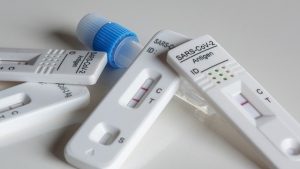
Telemedicine was temporarily permitted in response to the COVID-19 pandemic
•
A two-year pilot programme for community care (for aging in place) began in 16 districts
•
The First Comprehensive Plan of NHI (2019– 2023) was established
•
Dementia patients at an early stage became eligible for LTC insurance
•
Extra charge for treatments by highly experienced specialists was banned
•
Compulsory enrolment in health insurance for all foreigners and immigrants staying in the Republic Korea for more than 6 months
•
A five-year benefit expansion policy, called Moon Jae-In care or Moon Care, was announced
•
NBLSS reforms expanded population coverage and personalized the benefits in four categories
•
The levels of eligibility of LTCIs were expanded from three to four levels
•
Economic evaluation exemption for anticancer and orphan drugs
•
The copayment ceiling was further expanded from three to seven income levels
•
A pilot programme for RSA was launched for orphan drugs and pharmaceuticals against cancer and rare diseases
•
The DRG-based payment system for seven DRG was mandatorily implemented at general and tertiary hospitals
•
A five-year benefit expansion policy (2014– 2018), the Benefit Expansion Policy for Four Major Severe Diseases, was announced
•
The homeless became a Type 1 beneficiary of MA
•
The DRG-based payment system for seven DRG was mandatorily implemented at clinics and hospitals
•
Dementia Management Act was enacted
•
Pay-for-performance scheme on a few services was implemented based on quality assessments
•
Copayment reductions from 10% to 5% were applied for cancer and cardiovascular diseases
•
The Price-Volume Agreement was implemented
•
A new DRG-based payment, a combination of prospective payment and fee-for-service, was implemented as a pilot programme
•
The cost of hospitalization for Type 2 MA beneficiaries was reduced from 15% to 10%
•
Copayment reductions from 20% to 10% were applied for rare and incurable diseases
•
A five-year benefit expansion policy (2009– 2013) was announced
•
Conversion factor for fee scheduling was subdivided by the medical institution
•
Economic evaluation was required for listed drugs
•
Fixed rate per diem payment system for LTC hospitals was introduced
•
LTCI was introduced, separate from the NHI, but managed by the NHIC
•
LTCI Act was enacted
•
The user fee for outpatient care was applied to MA beneficiaries: KRW 1000 for primary care and KRW 2000 for tertiary hospitals
•
The positive list system was introduced
•
Copayment reductions from 20% to 10% were applied for cancer and cardiovascular diseases
•
A four-year benefit expansion policy (2005– 2008) was announced
•
A copayment ceiling was introduced for cumulative OOP payments over six months
•
The National Basic Living Security Act, enacted from Livelihood Protection Act
•
Financial accounts of the NHI schemes were consolidated
•
A HIPDC was introduced to decide the coverage of benefits package
•
The NBLSS was launched
•
The fee scheduling method changed to be based on a RBRV system
•
Medicine prescribing and dispensing were separated between doctors and pharmacists
•
All health insurance funds were merged into a single national health insurer (NHIS)
•
Fee schedule began to be negotiated between the insurer and provider associations
•
National Health Insurance Act enacted to succeed National Medical Insurance Act (enforced on 1 January 2000)
•
The Fiscal Stabilization Fund was established to reallocate contribution revenues across insurance funds
•
National Medical Insurance Act enacted succeeding Medical Insurance Act
•
A DRG-based payment was launched as a pilot programme based on voluntary participation
•
Long-term care hospitals were introduced for rehabilitation, mental health and postacute care
•
The programme covered all self-employed in urban areas, and mandatory health insurance achieved the universal coverage of population
•
Pharmaceuticals were covered by the NHI benefit package
•
The pilot programme covered all selfemployed in rural areas
•
Employees in companies with more than 16 workers were enrolled in NHI
•
The pilot programme for the self-employed was implemented in five rural and one urban areas
•
Welfare of Senior Citizens Act was enacted
•
A pilot programme for the self-employed was implemented in three rural areas
•
Employees in companies with more than 100 workers were enrolled in NHI
•
Government employees, teachers and employees of companies with more than 300 workers were enrolled in NHI
•
An MA programme for people living in poverty was initiated
•
Employees of large companies with more than 500 workers were enrolled in NHI
•
Medical Insurance Act was revised for compulsory enrolment as a legal foundation for SHP and UHC
•
Medical Insurance Act was enacted for voluntary enrolment
•
Livelihood Protection Act was enacted
2020
2019
2019
2018
2018
2018
2017
2015
2014
2014
2014
2013
2013
2013
2012
2012
2011
2011
2010
2009
2009
2009
2009
2009
2008
2008
2008
2008
2007
2007
2006
2006
2005
2004
2004
2003
2002
2000
2000
2000
2000
1999
1999
1998
1998
1997
1994
1989
1989
1988
1983
1982
1981
1981
1981
1979
1977
1977
1976
1963
1961