Authored by the WHO Team at the Office for Health Systems Financing, Barcelona Overview The Greek health system is facing major demographic, epidemiological and economic challenges and performance problems due to organizational and operational weaknesses such as...
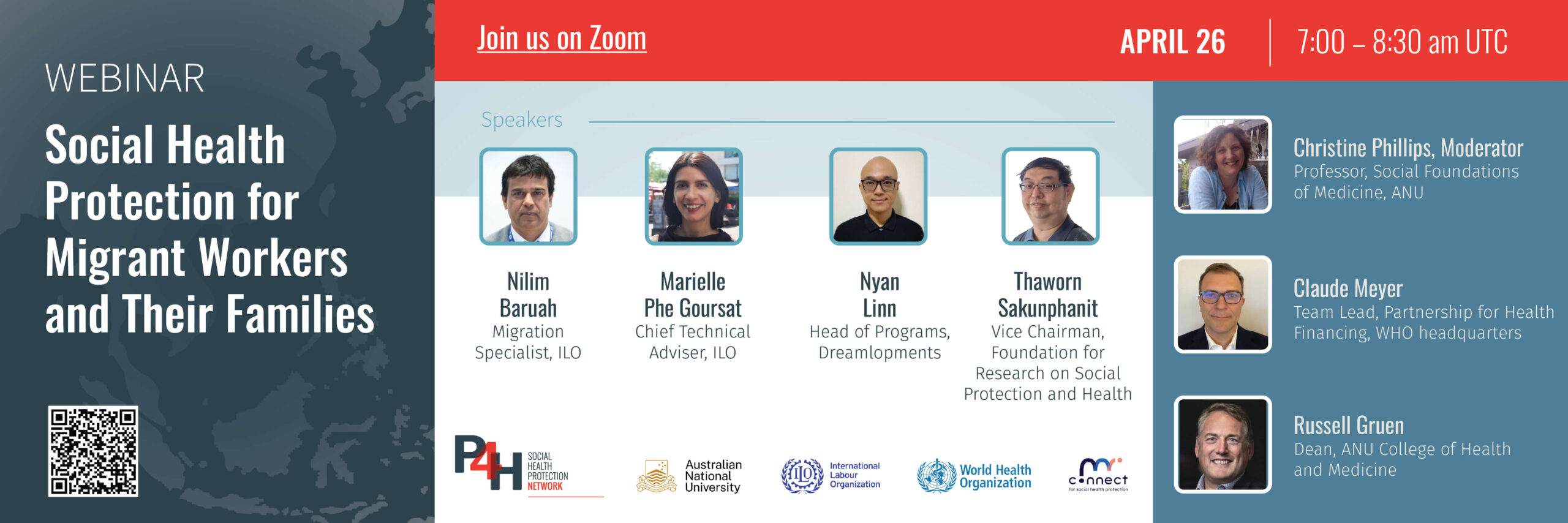
Executive Summary: Webinar 1 of the four-webinar series on Social Health Protection for Migrant Workers and Their Families
The P4H Network and Australian National University (ANU) initiated a four-part webinar series entitled Social Health Protection for Migrant Workers and Their Families that is scheduled to run through the summer of 2023. P4H and its partners strive to enable migrant...
Cameroun-Projet Backup Santé : Rapport final
Le Ministère de la Santé a réalisé en 2020, une étude pour évaluer les politiques relatives au genre dans la santé du Cameroun, en collaboration avec le P4H et la GIZ. L’objectif de l‟étude était d‟analyser la transformation sociale favorable aux femmes à travers le processus de budgétisation en utilisant la méthodologie à l‟aide de l‟outil « Equity Budgeting Tool ».Selon les résultats de cette étude, des discriminations de genre persistent dans le secteur de la santé, même si des efforts sont déployés pour les réduire. Les inégalités sont visibles au niveau de l‟accessibilité à certains soins de santé pour les femmes et dans certains groupes spécifiques en milieu rural où se pose avec acuité la question de disponibilité des médicaments et structures de santé. Ainsi, la persistance de ces inégalités contredit les discours politiques et les stratégies nationales qui énoncent l‟élimination des inégalités liées au genre.
C‟est dans ce contexte que le Projet BACKUP SANTE de la GIZ, a commandité la présente étude qui se situe dans la continuité des initiatives antérieures mises en œuvre, afin de mieux comprendre les enjeux genre dans le financement de la santé, afin d‟atteindre les objectifs de la Couverture Santé Universelle.
P4H Annual Review 2021-2022 FINAL
P4H Annual Review 2021-2022 Annex
Extension of social protection coverage to workers in the informal economy in Sudan
In Sudan just like most developing countries and emerging economies, a large part of its active workforce is made of the informal workers representing about 60 to 65% of the workforce. Although this is the case, the majority of the informal economy is not covered by...
Zimbabwe health sector expenditure review 2022
The Zimbabwe 2022 public expenditure review (PER) for health examines the recent evolution of public health expenditures in Zimbabwe and assesses opportunities for improving the efficiency, effectiveness, and equity. PER is important as it helps to uncover gaps in...
Costa Rica Universal Health Coverage Assessment
This preliminary assessment of the Costa Rican health system focuses on the goal of universal health coverage, with a particular focus on the financing system and related aspects of provision. The data provides insights into the extent of financial protection and...
Expanding Social Health Protection for Women at Risk of Migration in Honduras Desk Review and Regional Stakeholder Engagement Report
This report, available in English and Spanish, presents the findings of a literature review conducted to inform our understanding of the context in Honduras to expand social protection in health to women who are at risk of migration, as well as other vulnerable...
Dominican Republic UHC Study
This 2018 publication is part of the Universal Health Coverage (UHC) Studies Series launched in 2013 with the objective of sharing knowledge regarding pro-poor reforms advancing UHC in developing countries. The series is aimed at policy-makers and UHC reform...
Building resilient health financing in the wake of COVID-19: case studies of subnational health budgeting in Kenya
In 2020, the COVID-19 global pandemic illustrated like nothing else in recent history the importance of building resilient health systems. The diversion of health system resources to address COVID-19 care led to a disruption of essential health services which affected...
Restricted content
Health Financing System Assessment in Papua New Guinea
The document provides an analysis of the economic, demographic, and disease burden context, the health system structure, human resources for health and health expenditure in the country. It includes detailed information and analysis of the health expenditure trends,...
Fiji Health Accounts 2011-2015
This National Health Accounts report for Fiji provides health expenditures information for the period of 2011-2015 and tracks health expenditures from financing sources to health services and beneficiaries. An average of 9% of total government expenditure funded the...
Assessment of Social Health Insurance Feasibility and Desirability in Fiji 2013
This assessment of the feasibility and desirability of social health insurance (SHI) in Fiji highlights that the current healthcare financing system ensures the financial risk protection and the poor in this country do not face financial barriers in accessing...