

WEBINAR #2 on Social Health Protection and Health Financing Reforms in the CIS
Join us as at we exchange knowledge and regional perspectives of Social health protection and health financing reforms in Commonwealth of Independent States. Our panelists will exchange lessons learned, key achievements, and progress made toward social health...
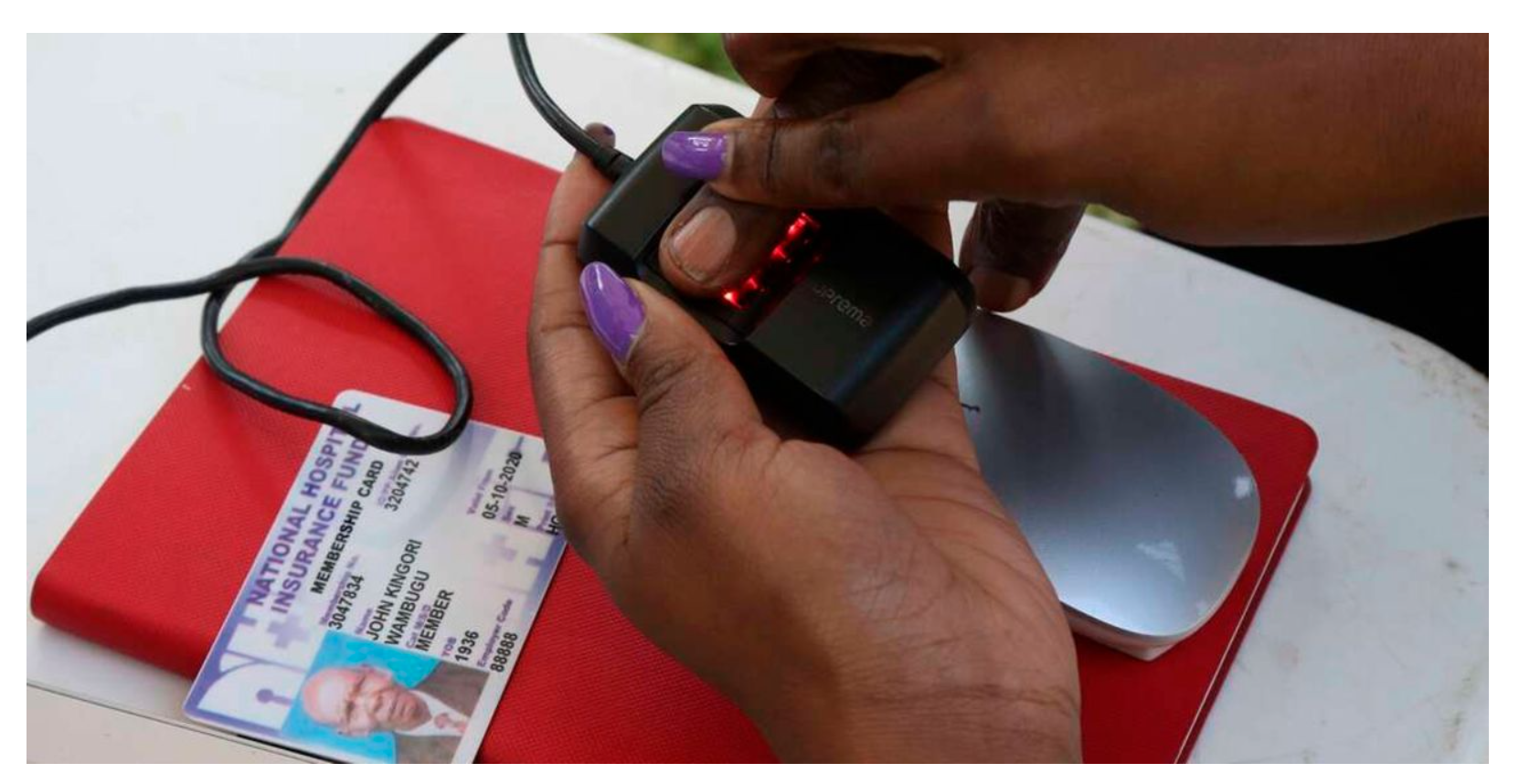
Relief for the poor as over 300,000 Kenyans enrolled for National Hospital Insurance
Over 326,000 vulnerable households in Nairobi have been registered for the National Hospital Insurance Insurance Fund (NHIF) by the Nairobi Metropolitan Services (NMS). The NHIF is part of the government’s universal health care policy to ensure that vulnerable...
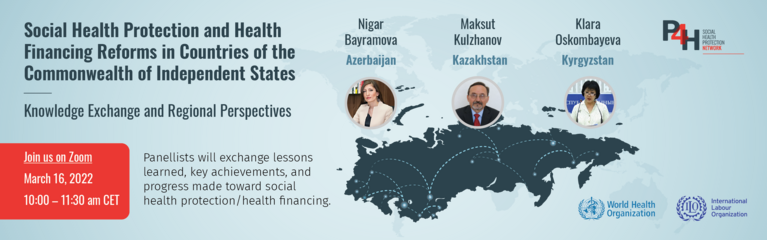
P4H Webinar on CIS #1: Presenting executive summary, additional resources and a video of the webinar now available on YouTube
On 16 March 2022 the P4H Network hosted the first of two webinars on social health protection and health financing reforms in three countries of the Commonwealth of Independent States (CIS). P4H hosted the webinar in collaboration with the World Health...
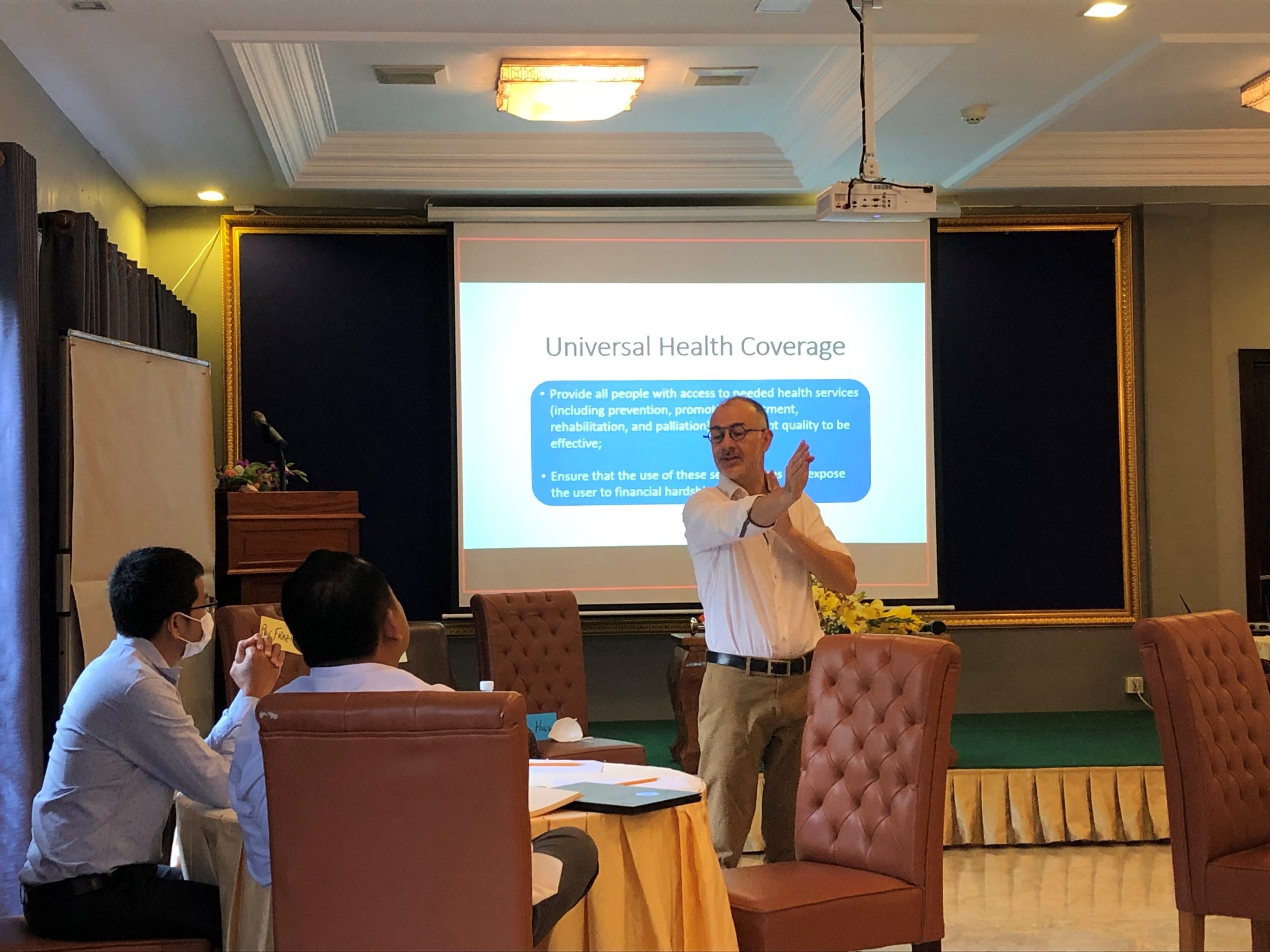
Health Financing Training in Kep, 29.03-01.04.2022
Fruitful Health Financing Training in Kep with GS-NSPC, WHO, GIZ and P4H!

A new document on the transition to Program Based Budgeting and its implication on health has been posted on the Uganda country page
The report describes Uganda's transition process to programme-based budget, as a means to better align with public policy priorities and enhance accountability and transparency. It also discusses what the implications are for the health sector. The report...

Webinar Series for Awareness-building on DRG for UHC
TARGET PARTICIPANTS: This e-learning course aims at building up knowledge and learning experiences for participants from countries that want to pursue the universal health coverage policy with payment to acute inpatient care with diagnosis-related group tools. The...

NITI Aayog suggests extending PMJAY coverage to ‘missing middle’
In a NITI Aayog report titled ‘Health Insurance for India’s Missing Middle’, the institution highlights that 30% of the population is devoid of health insurance, often termed as the 'missing middle' and has suggested three models for increasing the health insurance...

Evaluating Health Insurance Programmes: An Insurance Cascade Framework
Catastrophic health spending in India has remained high over the past 15 years despite the introduction of large and comprehensive social health insurance schemes (Pandey et al 2018, 2018b). Understanding why these schemes have not improved financial risk protection...

Health issues and health care expenditure among elderly in India
The study synthesises the empirical research studies and discusses the health need of the elderly population, healthcare utilization and healthcare expenditure. Despite an increasing feminization of India's older population, women's health in later life and the health...

Going Granular: Equity of Health Financing at the District and Facility Level in India
Health financing equity analysis rarely goes below the state level in India. This paper assesses the equity and effectiveness of public spending on health in the state of Odisha. It identifies the weak link between district spending and district need, proxied by...

Facilitators and barriers to participation of the private sector in health insurance in India
The study findings suggest that social service, competition and increased clientele were the common facilitating factors for enrolment in government health schemes. Low & delayed reimbursement, bribe to clear payment, limited services covered, and administrative...

Illness and Wage Loss: Longitudinal evidence from India
The paper quantifies the economic burden of illness due to wage loss and medical care spending, as well as differences in them across the socio-economic distribution. The study used data from Village Dynamics in South Asia (VDSA) survey and the Indian Human...

Addressing data and methodological limitations in estimating catastrophic health spending and impoverishment in India, 2004–18
The study data from the health and consumption surveys of National Sample Surveys over 14 years to overcome these limitations and estimated the incidence and intensity of CHE and impoverishment using the capacity-to-pay (CTP) approach. The incidence of CHE for...

“Demand Side” Health Insurance in India: The Price of Obfuscation
In this article, Prof Stefan Ecks argues that the new Government Financed Health Insurance schemes (GFHIs) in India are part of a neo-liberalization move toward “demand-side” healthcare which is shifting more decision-making responsibilities onto individuals rather...

The relationship between health expenditure, CO2 emissions, and economic growth in the BRICS countries
In this study, the researchers used Fourier autoregressive distributed lag (ARDL) model to study the correlation between health expenditures, CO2 emissions, and GDP fluctuations in BRICS countries from 2000 to 2019. The study presents some interesting findings and...