Le Ministère de la Santé a réalisé en 2020, une étude pour évaluer les politiques relatives au genre dans la santé du Cameroun, en collaboration avec le P4H et la GIZ. L’objectif de l‟étude était d‟analyser la transformation sociale favorable aux femmes à travers le processus de budgétisation en utilisant la méthodologie à l‟aide de l‟outil « Equity Budgeting Tool ».Selon les résultats de cette étude, des discriminations de genre persistent dans le secteur de la santé, même si des efforts sont déployés pour les réduire. Les inégalités sont visibles au niveau de l‟accessibilité à certains soins de santé pour les femmes et dans certains groupes spécifiques en milieu rural où se pose avec acuité la question de disponibilité des médicaments et structures de santé. Ainsi, la persistance de ces inégalités contredit les discours politiques et les stratégies nationales qui énoncent l‟élimination des inégalités liées au genre.
C‟est dans ce contexte que le Projet BACKUP SANTE de la GIZ, a commandité la présente étude qui se situe dans la continuité des initiatives antérieures mises en œuvre, afin de mieux comprendre les enjeux genre dans le financement de la santé, afin d‟atteindre les objectifs de la Couverture Santé Universelle.
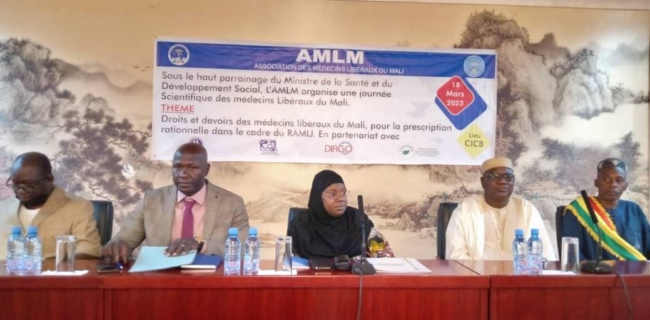
Mali-RAMU : L’association des médecins libéraux opte pour une prescription rationnelle
L'association des médecins libéraux du Mali a organisé le 18 mars 2023 à Bamako, une journée scientifique sur «Droits et devoirs des médecins libéraux, pour la prescription rationnelle dans le cadre du RAMU». La cérémonie d’ouverture a été présidée par la ministre de...
The road to Universal Health Coverage in Egypt: New expectations and hopes
This article originally featured in International Health Policies, discusses Egypt’s healthcare system, the universal health insurance law (2017) that exhibited Egypt’s political will to work towards universal health coverage, and the implementation of the law in the...
Research | Out‐of‐pocket fees for health care in Australia: implications for equity
Article examines the current provision of health care and out‐of‐pocket fees within Australia through a micro‐economic lens, identifying the access and equity implications of the dual public–private system, and considers potential systems‐level options for a way...
Côte d’Ivoire : la Poste et la CNAM ensemble pour booster la CMU
Les premiers responsables de la Poste CI et de la Caisse nationale d'assurance maladie (CNAM) affichent leur ambition commune à la réalisation du programme social du gouvernement. Pour y arriver, les 2 institutions comptent travailler en parfaite synergie à travers...
Health Financing Policy and Implementation in Fragile and Conflict-affected Setting: A Synthesis of Evidence and Recommendations
This paper is the product of a comprehensive review of both published and unpublished literature, and an extensive process of peer review and consultation. We extend our appreciation to the many comments we received on earlier versions of the paper at a number of...
A role for user charges? Thoughts from health financing reforms in Cambodia.
"The article examines how Cambodia has reformed its health financing system to ensure access without removing user fees."
Decision time: Cost estimations and policy implications to advance Universal Health Coverage in Cambodia
"The authors developed a modeling tool to facilitate the simplie, interactive estimation of cost and coverage for three policy alternatives, enabling decision-makers to simultaneously adjust for scenario options currently under consideration."
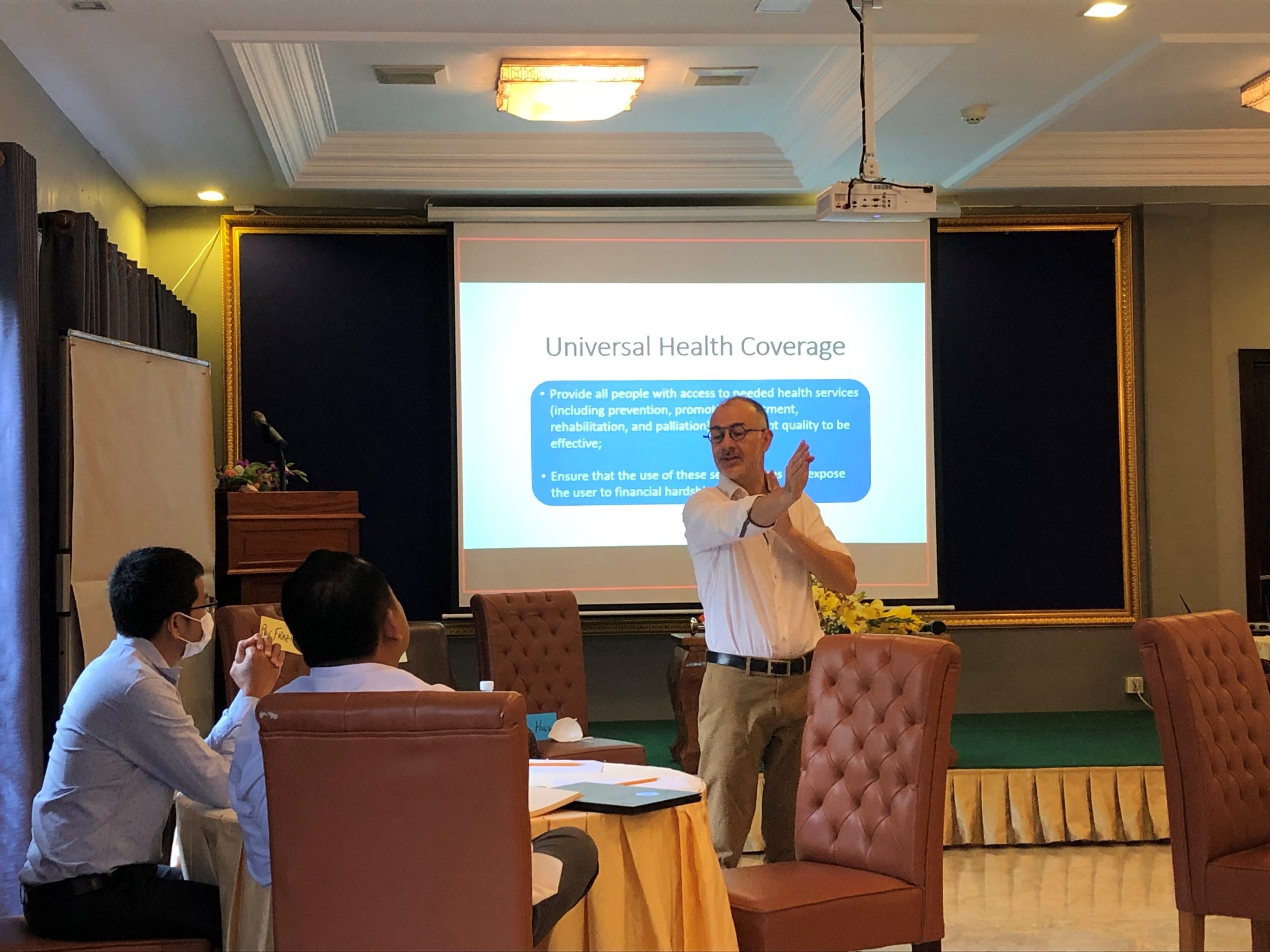
Health Financing Training in Kep, 29.03-01.04.2022
Fruitful Health Financing Training in Kep with GS-NSPC, WHO, GIZ and P4H!
Promising Practices That Are Helping Ministries of Health Improve Their Health Budget Execution
It’s a goal that has challenged many a health ministry: how to free up significant resources for health services by increasing health budget execution. Late last year, health sector practitioners from eight countries (Bangladesh, Ghana, Kenya, Lao PDR, Liberia,...
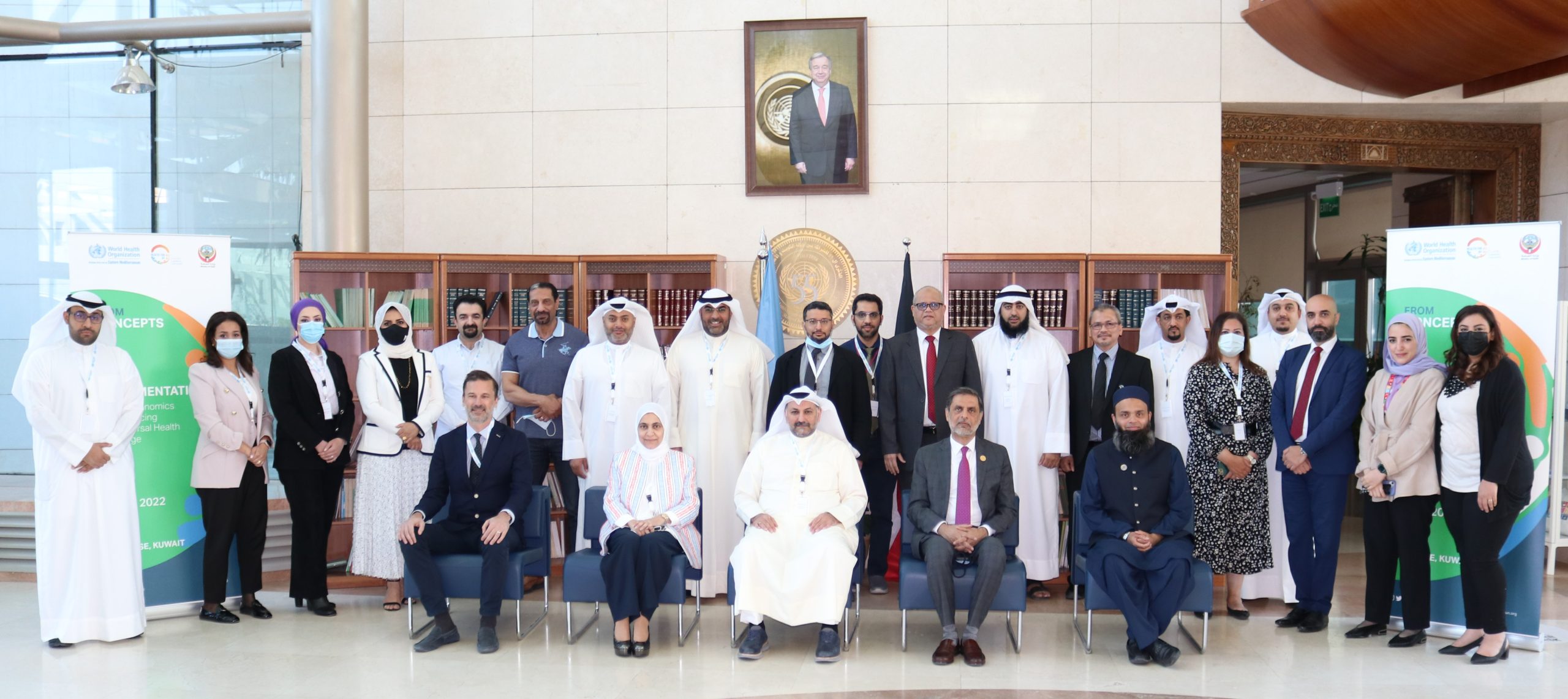
From Concepts to Implementation – Health Economics and Financing for Universal Health Coverage in Kuwait
From Concepts to Implementation – Health Economics and Financing for Universal Health Coverage in Kuwait concluded yesterday at the UN House. The learning event was co-chaired by Dr. Maitham Husain, Director, Planning Directorate, MOH, and Dr. Assad Hafeez, WHO...
The Political Economy of UHC Reform in Thailand: Lessons for Low- and Middle-Income Countries
Thailand achieved universal health coverage (UHC) with three public health insurance schemes in 2002. This study examined how political economy factors influenced the evolution of the UHC reform in Thailand by applying the political economy framework. This study...
Health Economics and Financing Workshop in Kuwait, 30-31 March 2022
The Kuwait Ministry of Health (MOH) and WHO Regional Office and Kuwait Country Office are jointly organizing a capacity building workshop on 30-31 March 2022, as part of an overall effort to strengthen capacity in health financing to support progress towards universal...
Social Protection System Review of Cambodia, OECD Development Pathways
"The Social Protection System Review is intended to contribute to the implementation of the Social Protection Policy Framework. It provides analysis and recommendations to lay the foundations for a comprehensive and sustainable social protection system."
Political economy analysis of universal health coverage and health financing reforms in low- and middle-income countries: the role of stakeholder engagement in the research process
Progress towards universal health coverage (UHC) is an inherently political process. Political economy analysis (PEA) is gaining momentum as a tool to better understand the role of the political and economic dimensions in shaping and achieving UHC in different...