Many countries, Tanzania included, committed to the goal of achieving UHC. A key lesson from research evidence and country experience in implementation of pro-poor UHC is that public budget plays a crucial role in financing health care access for the poor. This paper...
Universal health coverage (UHC) in Tanzania: Evaluating the potential of a public private partnership (PPP) in health financing system
In this paper, the author analyses how UHC is being implemented in the health financing system of Tanzania and also how PPPs are contributing towards the attainment of UHC. A cross sectional survey was conducted in the Kilimanjaro region in Tanzania to evaluate the...
Universal health coverage (UHC) in low-Income countries: Tanzania’s efforts to overcome barriers to equitable health service access
The Government of Tanzania has implemented a number of health sector reforms that promote UHC in the last two decades. This case study focuses primarily on the initiatives that foster UHC with a specific pro-poor lens. Tanzania’s efforts that can potentially benefit...
Universal health care coverage (UHC): healthcare financing and access to health care services in Kenya
Reliance on out-of-pocket (OOP) payments to finance health care is a barrier to health care access and can result in the impoverishment of households. Health care in Kenya is financed from three main sources: OOP expenditure (households), government expenditure and...
“We are called the et cetera”: experiences of the poor with health financing reforms that target them in Kenya
Kenya has implemented a number of healthcare reforms, demonstrating its intention to extend financial risk protection and service coverage for poor and vulnerable groups. These reforms include the provision of free maternity services, user-fee removal in public...
The progressivity of health care financing in Kenya
Healthcare financing should be equitable to ensure equal access to quality care and financial risk protection from exorbitant health care costs, through social health protection. In many low and middle income countries including Kenya, changes to healthcare financing...
Kenya’s COVID-19 budget: Funding for health and welfare
As the impact of Covid-19 continues to escalate, accountable public budgets that are aligned to the needs of people living in poverty and vulnerable populations are more crucial than ever. In the 2020/21 fiscal year, Kenya will not only be dealing with the social,...
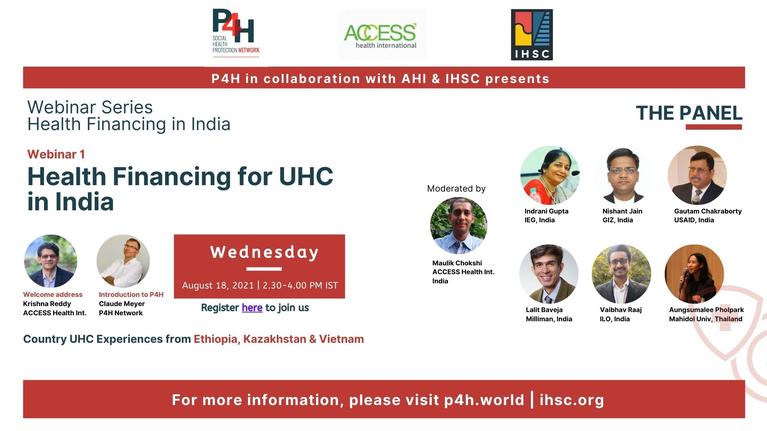
Now available: Executive summary of the first of the four-part webinar series on Health Financing in India
The webinar series titled Health Financing in India was launched to bring together national and international health systems and financing experts, economists, and researchers to discuss the burning health financing and social health protection issues in the country...
COVID-19 and progress towards achieving universal health coverage (UHC) in Nigeria
Nigeria like other low and middle-income countries made a commitment towards attaining UHC by 2030. The arrival of COVID‐19 poses additional pressure on the already weak health system, which in turn affects the provision of other equally important essential health...
Out-of-pocket (OOP) payments, catastrophic health expenditure and poverty among households in Nigeria
Despite the operationalisation of the national health insurance scheme in 2005, high reliance on OOP health payments as a means of financing health system in Nigeria persists. OOP health payments can generate catastrophic expenditures leading to household...
Covid-19: Ten million Malaysians to receive financial aid
Malaysia allocates RM3.1 billion for implementing Covid-19 special assistance (BKC), aiming to reduce the impacts of COVID-19, starting from September 6. BKC provides to 4.4 million households that include 1.1 million single senior citizens and 4.5 million...
Philippines provides cash aid to COVID-infected employees
In the Philippines, workers who had been infected with COVID-19 can now apply for financial support to the Employees’ Compensation Commission (ECC) through a courier service. This benefit covers both sickness and death due to COVID-19. The COVID-19 has been...
Smaller firms receives COVID wage subsidy in New Zealand
New Zealand paid over $876 million for the Covid-19 wage subsidy scheme so far to support more than a quarter of the country's employees affected by COVID-19. Of the 781,364 jobs are covered under the scheme, 14 percent were for self-employed workers....
P4H members ILO and WHO met to discuss social health protection in Ethiopia
In August, representatives from WHO and ILO met to discuss their work to support Universal Health Coverage (UHC) and strengthen social health protection in Ethiopia. The ILO team gave an overview of the PROSPECTS project, a new Partnership on Inclusive Jobs and...
Perspectives on financing population-based health care towards universal health coverage (UHC) among employed individuals in Ghanzi district, Botswana
Although health care in Botswana is highly subsidized and mainly financed through government taxes (68 %), 4.2% of the households still pay out of pocket exposing them to the risk of catastrophic health expenditures. In Botswana, 83% of the general population and 58%...